Beijing Daxing Metro Launches Palm Scan Fare Payment with PalmAI
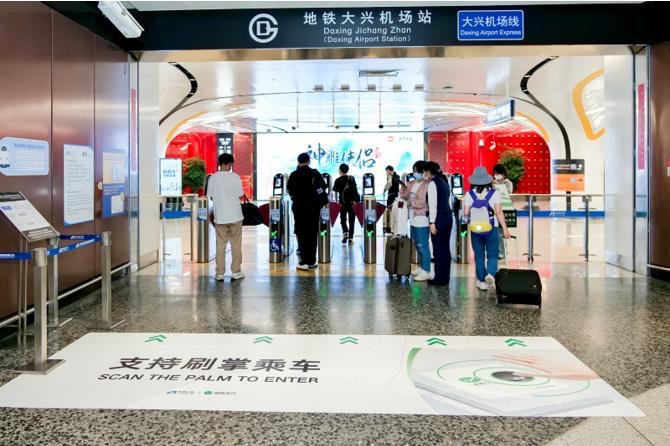
Palm payment is an AI-powered contactless fare technology that combines palm print and palm vein recognition to authorize transit transactions. Beijing Daxing Airport Express partnered with Tencent PalmAI to launch the world's first palm scan metro fare service — enabling commuters to enter and exit stations with a palm wave, no ticket, no card, no phone required.
At a Glance
| Dimension | Detail |
|---|---|
| Client | Beijing Daxing Airport Express (北京地铁大兴机场线) |
| Industry | Public Transportation |
| Region | Beijing, China |
| Challenge | Commuters need fast, device-free fare payment that works even with masks, wet hands, or dead phone batteries |
| Solution | Tencent PalmAI PayMax — palm scan fare payment integrated with metro turnstiles |
| Key Result | World's first metro system with palm scan fare payment — operational at 3 stations since May 2023 |
| Stations | Caoqiao Station, Daxing Xincheng Station, Daxing Airport Station |
Why Existing Metro Fare Methods Still Create Commuter Friction
Beijing Daxing Airport Express connects the city center (Caoqiao) to Daxing International Airport — serving high-frequency commuters and travelers carrying luggage who need the fastest possible station entry. Despite China's advanced mobile payment ecosystem, several friction points persist during peak-hour transit:
Before palm payment:
| Pain point | Business impact |
|---|---|
| Phone-based QR payment requires pulling out device | Slows entry, especially for travelers with luggage or in rush |
| Phone battery dead = no payment method | Stranded commuters, station staff intervention needed |
| Wearing masks post-pandemic makes face recognition unreliable | System fallbacks cause delays; privacy concerns limit adoption |
| QR queue misidentification during rush hour — scanning wrong person's code | Fare disputes and gate errors during high-density queuing |
| Physical transit cards get lost or forgotten | Replacement hassle; tourists may not have local card |
For an airport express line where every second of station throughput matters, the ideal solution works without any device, in any condition, and cannot misidentify adjacent passengers.
→ Explore PalmAI's transportation and transit solutions
Why Palm Recognition Solves What Face and QR Cannot in Metro Environments
Beijing Daxing Airport Express needed a fare method that functions flawlessly under conditions that challenge existing biometrics: masks, crowds, wet weather, and luggage-burdened travelers.
Palm Payment vs Alternatives for Metro Transit
| Criterion | Physical Card | QR Code (Phone) | Face Recognition | Palm Recognition |
|---|---|---|---|---|
| Device requirement | Must carry card | Phone must be charged and accessible | No device, but cameras needed | No device — palm is the credential |
| Mask compatibility | N/A | N/A | Fails with masks — critical weakness post-pandemic | Unaffected by masks |
| Rush-hour precision | Card-per-person, no confusion | Risk of scanning adjacent person's code in dense queue | Can misidentify in crowds | Palm positioned directly on reader — zero cross-person error |
| All-weather reliability | Works | Phone screen unreadable in rain/sun | Affected by lighting, steam | Condition-independent — works in any weather |
| Speed at turnstile | 1–2s (tap) | 3–5s (pull phone, open app, scan) | 1–2s (when conditions optimal) | <1s palm wave |
Where palm payment is not the default fit: For occasional metro users who ride once and never return, enrollment friction may not be worthwhile. Card or QR remains appropriate for one-time tourists. Palm payment delivers maximum value for high-frequency commuters.
Palm recognition was selected for Daxing Airport Express because:
- Mask-friendly — works regardless of face covering, critical for transit environments
- No misidentification in queues — palm must be deliberately positioned on the reader, unlike face or QR which can accidentally capture adjacent passengers
- Truly device-free — no phone, card, or wearable needed; hands are always available
- Sub-second speed — turnstile throughput matches or exceeds the fastest NFC card tap
- Privacy-respectful — palm scanning feels less intrusive than face cameras in public transit (a recognized barrier to face-based transit adoption)
Three Stations, One Palm: How Daxing Metro Palm Payment Works
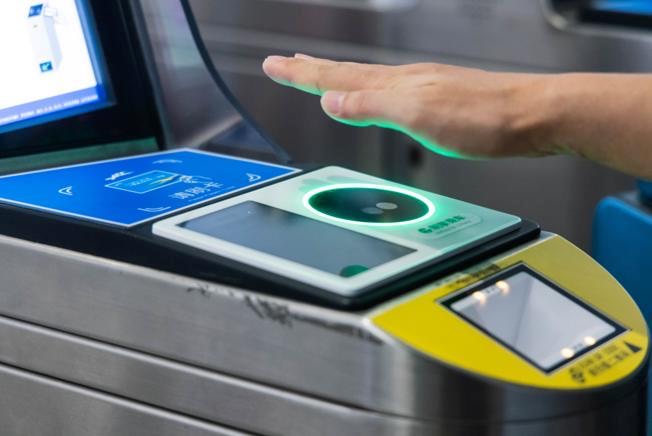
Tencent PalmAI's PayMax platform powers the fare payment system, processing palm verification and fare deduction in real-time at turnstile gates across three stations.
Technical implementation:
| Component | Detail |
|---|---|
| Biometric modality | Palm print + palm vein (dual-modal) |
| Solution tier | PalmAI PayMax — high-throughput transit fare processing |
| Stations deployed | Caoqiao, Daxing Xincheng, Daxing Airport |
| Verification speed | <1 second per transaction |
| Security | Enterprise-grade, Accuracy 99.9% |
| Network resilience | Weak-network support — auto-retries and uploads when connection restores |
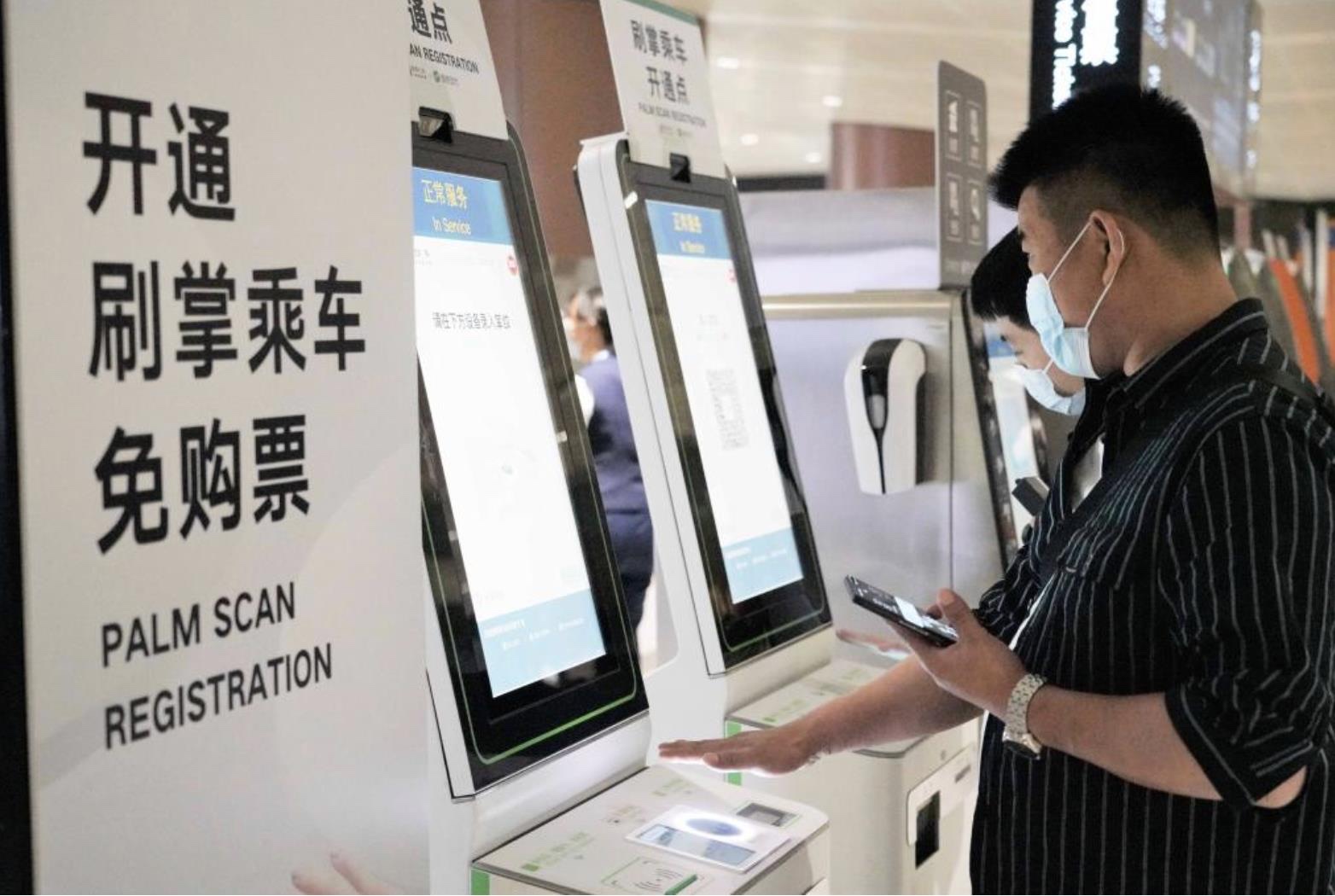
| Registration | Self-service kiosks at stations — palm + payment account binding |
Commuter journey:
- Register — At self-service kiosks in any of the 3 stations, bind palm to payment account (WeChat Pay) following on-screen instructions
- Enter — Walk to any turnstile with palm scan capability, wave palm over the sensor — gate opens in <1 second
- Exit — At destination station, wave palm again — fare calculated and deducted automatically
- No device needed — entire journey from entry to exit requires only your hand
From Phone Fumbling to Palm Wave: Transit Speed Transformed
| Metric | Before (QR/Card) | After (Palm Scan) | Improvement |
|---|---|---|---|
| Turnstile entry speed | 3–5s (QR: pull phone, open app, scan) | <1s (palm wave) | ~80% faster entry |
| Device dependency | Phone mandatory (must be charged) | No device needed | True device-free transit |
| Mask interference | Face recognition fails with masks | Palm unaffected by masks | All-condition reliability |
| Queue misidentification | QR can scan wrong person in dense crowd | Palm positioned directly — zero cross-person error | Eliminated misidentification |
| Fare method availability | Fails when phone dead or card forgotten | Palm always available | 100% availability |
What Transit Operators Should Consider Before Deploying Palm Fare Payment
Before implementing palm-based fare collection across a metro network, transit authorities should evaluate:
- Throughput capacity — verify that palm verification speed (<1 second) meets peak-hour passenger flow requirements at each gate; benchmark against existing NFC card tap performance
- Registration channel design — place self-service enrollment kiosks at high-visibility locations (station halls, not hidden corners) with clear signage and staff assistance during initial launch period
- Weak-network handling — metro underground environments have connectivity challenges; ensure the system supports smart retry and offline queuing for payment settlement
- Fallback coexistence — palm turnstiles should continue accepting cards and QR codes for passengers who haven't enrolled; avoid dedicating all gates to palm-only
- Commuter education — transit passengers need clear communication about enrollment benefits ("never worry about dead phone battery again") and privacy protections (encrypted templates, not stored images)
What's Next for Palm Payment in Public Transit
As Beijing Daxing Airport Express demonstrates the viability of palm-based metro fare payment, the model creates a template for transit networks worldwide — particularly airport express lines and high-frequency commuter routes where speed and device-free convenience deliver the most value. The future: ride any train, bus, or metro by simply waving your palm at the gate.
→ Ready to bring palm payment to your transit network? Discuss palm recognition integration for fare collection systems using the contact form on this page.
FAQ
How does palm scan fare payment work on Beijing Daxing Metro?
Palm scan fare payment on Beijing Daxing Airport Express uses Tencent PalmAI's dual-modal recognition — combining palm print and palm vein patterns — to verify commuter identity and authorize fare deduction in under 1 second. Commuters register once at a station kiosk, linking their palm to their payment account. At every subsequent ride, they wave their palm at the turnstile sensor to enter, and wave again at the destination to exit. Fare is calculated and deducted automatically — no phone, card, or ticket needed.
Is palm recognition reliable when commuters wear masks or gloves?
Palm recognition is completely unaffected by masks, hats, sunglasses, or other facial coverings — because it reads the palm, not the face. For gloves: standard thin gloves may reduce accuracy; the system is optimized for bare-hand use. In practice, commuters naturally remove one glove to scan their palm — a gesture that takes less time than pulling out a phone. The key advantage over face recognition in transit: masks never interfere with palm scanning.
How long does it take to deploy palm fare payment across a metro line?
Beijing Daxing Airport Express deployed palm scan fare payment across 3 stations (Caoqiao, Daxing Xincheng, Daxing Airport). Deployment involves integrating PalmAI's PayMax platform with existing AFC (Automatic Fare Collection) infrastructure, installing palm recognition modules on turnstile gates, and setting up registration kiosks. Timeline depends on station count, existing hardware compatibility, and regulatory approvals. The PayMax platform includes weak-network support critical for underground metro environments.
Can occasional riders use palm payment, or is it only for regular commuters?
Any rider can enroll — the one-time registration takes approximately 30 seconds at a station kiosk. However, palm payment delivers the most value for high-frequency commuters who ride daily and benefit from never needing their phone or card. Occasional visitors or tourists may find it simpler to continue using existing QR or card methods. Both systems run in parallel on the same turnstiles.
What happens to palm data collected in the metro system?
Tencent PalmAI converts the palm scan into an encrypted mathematical template during registration. The original palm image is discarded immediately — no photograph is ever stored in the system. The encrypted template cannot be reverse-engineered into a palm image. Data handling follows Chinese data protection regulations, and palm templates are stored in secure, encrypted databases separate from personal identity information.
Related Success Stories
Other PalmAI palm payment and access deployments worth comparing:
- How 7-Eleven achieved 25% faster checkout with palm payment — palm payment at convenience-retail scale (1,500 stores)
- How Visa is launching palm payment in Singapore — international payment-network adoption of palm payment
- How a national sports venue went fully hands-free with palm recognition — comparable high-throughput public-venue palm access
→ Browse all PalmAI success stories
About Tencent PalmAI
Tencent PalmAI is an AI-powered palm recognition service that combines palm print and palm vein dual-modal identification. Developed by Tencent's YouTu Lab and AI Lab — with 20+ top conference publications, 90+ granted patents, and 400+ pending — PalmAI powers contactless identity verification, payment, and access control for enterprises across retail, finance, healthcare, and smart building sectors worldwide. The Beijing Daxing Airport Express deployment proves how palm recognition enables transit operators to deliver the fastest, most reliable device-free fare payment — working through masks, rain, and rush-hour crowds.