Why Millions of Households Switched from Fingerprint to Palm Vein Locks
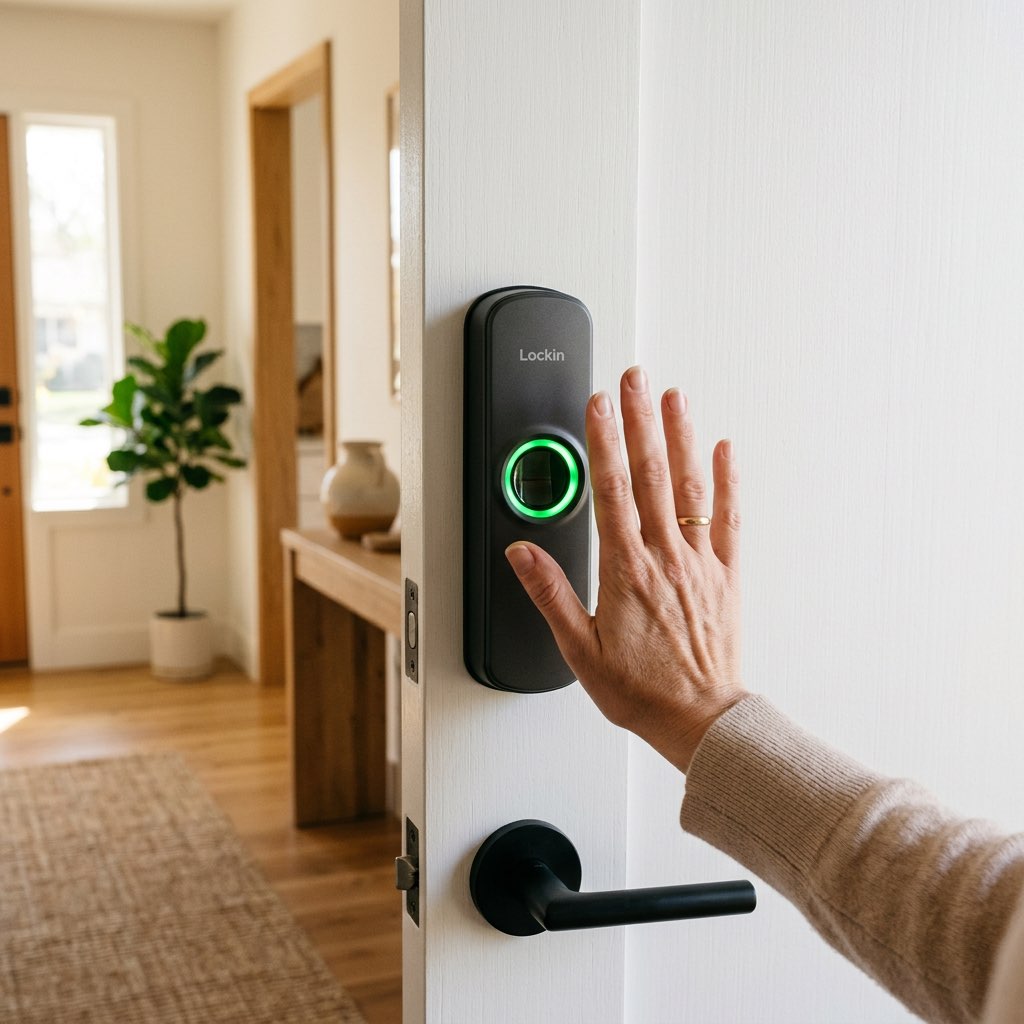
Palm vein recognition is an AI-powered contactless biometric that reads unique vascular patterns beneath the skin — unaffected by surface conditions and impossible to replicate. Lockin Technology, a multi-year Tencent Cloud partner, integrates PalmAI's palm vein algorithm into its V5 series smart locks, solving the wet-finger problem that frustrates millions of fingerprint lock users.
At a Glance
| Dimension | Detail |
|---|---|
| Client | Lockin Technology (鹿客) |
| Industry | Smart Lock / Smart Home |
| Region | China (millions of households) |
| Challenge | Fingerprint lock failures with wet/dry hands — the most common smart lock complaint |
| Solution | Tencent PalmAI Lock — palm vein recognition module in the V5 series |
| Key Result | Reliable unlocking regardless of hand condition; loved by millions of households |
| Partnership | Multi-year collaboration leveraging Tencent's palm vein research |
The Wet-Finger Problem — Smart Locks' Most Common Failure Mode
Lockin Technology is a leading Chinese smart lock brand serving millions of households. Through years of consumer feedback data, Lockin identified the single most frequent user complaint: the lock doesn't recognize my fingerprint when my hands are wet, dry, greasy, or cold.
The root cause analysis:
| Condition | Why fingerprint fails | Frequency |
|---|---|---|
| Wet hands (after washing, rain) | Water film distorts surface pattern | Daily for most users |
| Dry/cracked skin (winter, elderly) | Insufficient ridge detail for matching | Seasonal, persistent for elderly |
| Greasy hands (after cooking, lotions) | Oil film prevents clean sensor contact | Daily in kitchen-adjacent homes |
| Cold hands (winter, outdoor return) | Reduced blood flow flattens ridges | Seasonal |
| Worn fingerprints (manual labor, aging) | Permanent reduction in ridge detail | Permanent for affected users |
These are not edge cases — they represent everyday household scenarios. A lock that fails when you come home from cooking dinner is not delivering on its convenience promise.
→ Explore PalmAI Lock solutions
Palm Vein vs Fingerprint: Condition Reliability Comparison
| Daily Scenario | Fingerprint Lock | Palm Vein Lock |
|---|---|---|
| After washing dishes (wet hands) | Frequently fails — water disrupts surface pattern | Works — reads internal veins, unaffected by surface moisture |
| After cooking (greasy/oily) | Fails — oil film prevents clean read | Works — oil doesn't penetrate to vein layer |
| Winter cold hands | Unreliable — reduced blood flow flattens ridges | Works — IR still reads deeper vascular structure |
| Elderly family member (worn prints) | Permanent failure — insufficient ridge detail | Works — vein patterns stable regardless of skin aging |
| Post-exercise (sweaty) | Inconsistent — moisture interference | Works — sweat is surface-only |
| Returning from rain | Fails — wet finger surface | Works — rain doesn't reach sub-dermal veins |
When fingerprint still works fine: For young adults with healthy skin in temperate climates who rarely cook or exercise before entering — fingerprint is reliable enough. Palm vein solves for the rest of the household and the rest of the year.
How PalmAI Solves Lockin V5's Reliability Challenge
Tencent Cloud and Lockin Technology have maintained a close partnership in the smart lock space for years. Leveraging Tencent's multi-year palm vein recognition research, PalmAI powers the V5 series with a biometric that is fundamentally immune to surface conditions.
Why palm vein recognition is condition-independent:
Palm vein patterns are internal vascular structures read by near-infrared light that penetrates the skin surface. Whether your palm's surface is wet, dry, oily, cold, or aged — the sub-dermal vein pattern remains unchanged and readable. This is the fundamental difference from fingerprint (surface pattern) and face (external feature).
Technical implementation:
| Component | Detail |
|---|---|
| Biometric modality | Palm vein (sub-dermal near-infrared) |
| Algorithm | Tencent YouTu Lab — multi-year palm vein research |
| Processing | On-device (no cloud required) |
| Recognition speed | < 0.8 seconds |
| Condition tolerance | Wet, dry, greasy, cold, aged — all supported |
| Age range | 8–100 years |
| Family capacity | Multiple family members enrolled, individually distinguished |
Lockin V5 Results: Solving the Daily Frustration
| Scenario | Fingerprint Lock | Lockin V5 Palm Vein (PalmAI) |
|---|---|---|
| Returning from kitchen (greasy hands) | ❌ Fails | ✅ Works |
| After washing hands (wet) | ❌ Often fails | ✅ Works |
| Winter cold hands | ❌ Unreliable | ✅ Works |
| Elderly family member (worn prints) | ❌ Frequent rejection | ✅ Works |
| Post-exercise (sweaty) | ❌ Inconsistent | ✅ Works |
| Security against forgery | ⚠️ Silicone replicas possible | ✅ Sub-dermal, unforgeable |
What's Next for Lockin and PalmAI
As palm vein recognition proves its daily reliability advantage over fingerprint in millions of households, Lockin is expanding the technology across its product lineup. The V5 series demonstrates that palm vein is not a niche feature — it is a direct replacement for fingerprint as the primary biometric in smart locks, solving the most common user frustration at the root.
→ Interested in PalmAI Lock for your lock products? Discuss palm vein module integration using the contact form on this page.
FAQ
Why does the Lockin V5 smart lock with palm vein work when fingerprint locks fail?
Fingerprint locks read surface patterns on your finger's skin — patterns that are easily disrupted by water, oil, dryness, or wear. The Lockin V5 uses Tencent PalmAI's near-infrared palm vein recognition to read blood vessel patterns beneath the skin. These internal patterns are unaffected by whatever is happening on your skin's surface, providing reliable recognition in all the daily conditions where fingerprint locks fail.
Is palm vein recognition in the Lockin V5 more secure than fingerprint?
Yes. Fingerprints leave traces on every surface you touch and can be lifted or replicated. Palm vein patterns are invisible without active near-infrared illumination at close range — they cannot be photographed, collected from objects, or replicated. The Lockin V5 with PalmAI achieves zero misidentifications under standard conditions.
How many family members can the Lockin V5 smart lock with palm vein support?
The Lockin V5 supports enrollment of multiple family members, with each person's palm vein pattern stored as a separate encrypted template. The lock distinguishes between all enrolled users — even identical twins — because vein patterns are unique to each individual. This enables per-person access logs and smart home automations.
Does the lock require internet connectivity to work?
No. PalmAI Lock processes palm vein recognition entirely on-device. The encrypted template is stored in the lock's secure hardware and never transmitted externally. The lock works reliably without any network connection.
How does palm vein compare to face recognition door locks?
Palm vein recognition offers stronger privacy (no facial photo captured), better condition reliability (unaffected by lighting, masks, glasses), and higher security (sub-dermal pattern vs. external facial features). Face recognition locks can also be fooled by high-quality photos or struggle in low-light hallway conditions — neither issue applies to palm vein.
Related Success Stories
Other PalmAI Lock smart-lock deployments worth comparing:
- Xiaomi M30 & M40 smart locks deliver palm vein recognition — mass-market consumer smart-home brand
- Can your smart lock be spoofed? How KAADAS addressed forgery risk — anti-spoofing focus, premium smart-lock brand
- Do you have to choose between lock security and convenience? (Desman) — premium smart locks with palm vein recognition
→ Browse all PalmAI success stories
About Tencent PalmAI
Tencent PalmAI is an AI-powered palm recognition service combining palm print and palm vein dual-modal identification. The Lock solution delivers edge-based palm vein recognition for residential door locks. Lockin's V5 series, serving millions of households, demonstrates how palm vein recognition directly solves the most common consumer complaint about fingerprint smart locks — failure in everyday conditions.